📋 TL;DR — Quick Summary (Click to Expand)
A silver IRA late retirement strategy lets catch-up savers add physical precious metals to a self-directed IRA at a fraction of gold’s price per ounce. The lower entry point means you can accumulate more metal faster. Silver carries both monetary and industrial demand, which gives it a different risk profile than gold alone. A silver IRA follows the same IRS rules as a gold IRA: approved custodian, approved depository, minimum .999 fineness. For anyone exploring a silver IRA late in retirement, the barrier to entry is lower than most expect. This guide covers how a silver IRA late retirement approach works, what the IRS requires, what it costs, and where silver fits alongside other retirement holdings.
You did everything right for 25 years. Raised the kids. Paid the mortgage. Kept the lights on. Retirement savings came last because everything else came first. Now you are 55 and the math does not add up. You are not alone. And you are not out of options.
📑 Table of Contents (Click to Expand)
- Why Silver Appeals to Late-Stage Retirement Savers
- Silver vs Gold: The Entry Point Advantage
- How a Silver IRA Works
- IRS Rules for Silver in an IRA
- What a Silver IRA Actually Costs
- Catch-Up Contributions and Silver IRAs
- Silver’s Industrial Demand Factor
- Risks and Trade-Offs: Why a Silver IRA Late in Retirement Requires Honesty
- Silver IRA vs Other Catch-Up Strategies
- Frequently Asked Questions
- Conclusion
Why Silver Appeals to Late-Stage Retirement Savers
Starting late changes the math. It does not change the options.
Most retirement content assumes you began at 30. Maxed out your 401k every year. Caught every employer match. Watched compound interest do the heavy lifting. Meanwhile, the dollar buys 25% less than it did five years ago. The math moved against everyone. It moved faster against those who started late.
That is not your story. Your story involves life happening first and savings happening when you could manage it. Now the gap between what you have and what you need feels wider every year. A silver IRA late retirement strategy will not close that gap overnight. But it gives catch-up savers a tangible starting point that paper assets do not.
Silver IRAs have gained attention among late-stage savers for a specific reason: the price per ounce. Gold trades above $5,300 an ounce on March 2nd, 2026. Silver trades under $100, a fraction of that. For someone with limited capital trying to build tangible asset exposure inside a retirement account, silver offers more metal per dollar.
More metal means more flexibility when it comes time to take distributions. You can sell smaller increments. You can take in-kind distributions of individual coins rather than liquidating an entire gold bar.
That practical flexibility matters when every dollar counts.
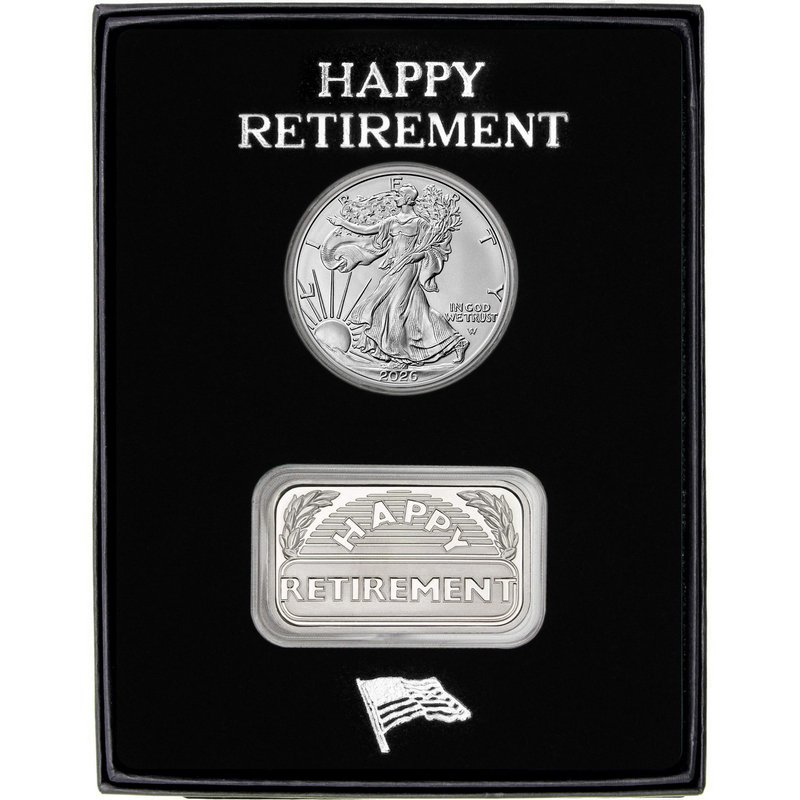
Late-stage savers are discovering silver as a lower-cost entry into precious metals IRAs.
Silver vs Gold: The Entry Point Advantage
Gold gets the headlines. Silver does the math differently.
At current prices, one ounce of gold costs roughly what many catch-up retirees can contribute in a single year. One ounce of silver costs less than a dinner out. That gap creates real differences in how you build a precious metals position inside an IRA.
Consider a $7,000 IRA contribution. After custodian fees and dealer premiums, you might acquire a fraction of a single gold ounce. That same contribution buys a meaningful stack of silver.
The gold-to-silver ratio has historically averaged between 50:1 and 80:1. When that ratio narrows, silver outperforms gold on a percentage basis. When it widens, gold holds steadier. Neither outcome is guaranteed. But the ratio gives silver a different performance characteristic that some investors find useful for diversification.
For the catch-up retiree, the entry point is not just about price. It is about psychology. Buying 100 ounces of silver feels like building something. Buying a quarter-ounce of gold feels like barely starting.
Both feelings are valid. The math works either way. But momentum matters when you are trying to build a habit of saving after years of delay. A silver IRA late in retirement works specifically because the lower price point creates that momentum faster.
How a Silver IRA Works
A silver IRA is a self-directed individual retirement account that holds physical silver instead of stocks, bonds, or mutual funds. The IRS does not have a separate category called a “silver IRA.” It falls under the same rules as any precious metals IRA. Understanding how a silver IRA works is the first step for anyone considering a silver IRA late in retirement.
The structure requires three parties working together.
First, a self-directed IRA custodian. This is a financial institution approved by the IRS to hold alternative assets. Traditional brokerages like Fidelity or Schwab do not offer precious metals custody. You need a custodian that specializes in it.
Second, an approved depository. The IRS requires that IRA-owned metals be stored in an approved facility. You cannot store them at home, in a personal safe, or in a bank safe deposit box. Approved depositories include facilities like Delaware Depository, Brinks, and CNT Depository.
Third, a precious metals dealer. This is where you actually purchase the silver. Some custodians work with specific dealers. Others give you a list of approved options.
The process works like this: you fund your self-directed IRA, select your silver products, direct your custodian to purchase them through a dealer, and the dealer ships the metal directly to the depository. You never touch the silver. It goes from dealer to vault. Whether you open a silver IRA at 35 or open a silver IRA late in retirement at 58, the mechanics are identical.
IRS Rules for Silver in an IRA
The IRS is specific about what silver qualifies for IRA inclusion. These rules apply whether you opened your silver IRA at age 30 or started a silver IRA late in retirement. No exceptions based on timing.
Silver must be .999 fine or better. One exception exists: American Silver Eagles are approved regardless of fineness because they are authorized by federal statute (IRS Publication on IRA Collectibles).
Other commonly approved silver products include Canadian Silver Maple Leafs, Austrian Silver Philharmonics, Australian Silver Kangaroos, and silver bars from approved manufacturers like PAMP Suisse, Johnson Matthey, and Engelhard.
What you cannot hold in an IRA: collectible coins, numismatic pieces, commemorative coins that do not meet purity standards, and any silver below .999 fineness.
The IRS also prohibits personal possession. If you take physical delivery of IRA-owned silver, it counts as a distribution. You owe income tax on the fair market value plus a 10% early withdrawal penalty if you are under 59½.
Storage must be at an approved depository. Segregated storage keeps your specific coins and bars identified and separated. Commingled storage pools your metal with other account holders but tracks your ownership by weight. Segregated costs more. Commingled costs less. Both satisfy IRS requirements.
What it means for you: The IRS does not make this complicated. Buy approved silver. Store it in an approved vault. Do not take it home. Follow those three rules and your silver IRA stays tax-advantaged.
What a Silver IRA Actually Costs
Transparency matters here. Silver IRAs carry more fees than a standard brokerage IRA. Knowing the numbers upfront prevents surprises. This is especially true for anyone opening a silver IRA late in retirement with a smaller starting balance, where fees take a larger percentage bite.
| Fee Type | Typical Range | When Charged |
|---|---|---|
| Account Setup | $50 – $150 | One-time |
| Annual Maintenance | $75 – $300 | Yearly |
| Storage (Segregated) | $150 – $300 | Yearly |
| Storage (Commingled) | $100 – $200 | Yearly |
| Dealer Premiums | 3% – 15% over spot | Per purchase |
| Transaction/Wire Fees | $25 – $50 | Per transaction |
These fees eat into returns, especially on smaller accounts. A $5,000 silver IRA paying $300 in annual fees loses 6% to overhead before the metal moves a penny. A $50,000 account paying the same fees loses 0.6%. Scale matters.
What it means for you: If your account is under $10,000, fees will take a real bite. Run the numbers before you commit, not after.
Dealer premiums deserve extra attention. Silver premiums run higher than gold premiums on a percentage basis. American Silver Eagles often carry premiums of 8% to 15% over spot price. Generic silver rounds carry lower premiums, typically 3% to 5%. Silver bars fall somewhere in between.
The premium is not a fee you pay to a custodian. It is the markup between the raw metal price and what you actually pay to acquire the finished product. Every silver buyer pays it. IRA buyers and cash buyers alike.
Catch-Up Contributions and Silver IRAs
The IRS allows extra contributions for savers aged 50 and older. For 2026, the standard IRA contribution limit is $7,000. The catch-up provision adds $1,000, bringing the total to $8,000 for anyone 50 or older (IRS Contribution Limits). For those building a silver IRA late in retirement, that extra $1,000 buys real metal.
At current silver prices, $1,000 buys measurable metal. In a stock portfolio, $1,000 barely registers.
If you also have an old 401k from a previous employer, you can roll that balance into a self-directed IRA without contribution limits applying. A $30,000 orphaned 401k becomes a funded silver IRA late retirement vehicle in two to six weeks through a direct rollover. No taxes owed on the transfer. No penalties.
The rollover process works the same whether you are buying gold or silver. The custodian changes. The depository changes. The IRS rules stay identical.
🎯 Free Download: The Gold IRA Playbook
Step-by-step rollover walkthrough, custodian comparison worksheet, and IRS compliance checklist. Built for people who want facts before making decisions.
✅ No credit card required ✅ Instant PDF delivery
Silver’s Industrial Demand Factor
Gold is primarily a monetary metal. People buy it to store value. Industrial use accounts for roughly 10% of annual gold demand.
Silver operates differently. Industrial applications consume more than half of annual silver production. Solar panels, electronics, electric vehicles, medical devices, and water purification all require silver. This dual nature—monetary metal and industrial commodity—gives silver a demand floor that gold does not share.
The Silver Institute reported global silver demand reaching record levels in recent years, with industrial fabrication leading the increase. Solar panel manufacturing alone consumed over 200 million ounces in 2024, and that number continues to grow as countries expand renewable energy capacity.
For the catch-up retiree considering a silver IRA late in retirement, this matters because industrial demand creates a consumption cycle. Silver gets used up in manufacturing. Gold sits in vaults. Used silver rarely gets recycled at scale because the amounts in each device are too small to recover economically.
This structural consumption does not guarantee price increases. Supply can expand. Substitution can reduce demand. Technology changes. But the industrial foundation gives silver a fundamentally different demand profile than gold. For a silver IRA late retirement saver, that dual demand base adds a layer of real-world utility that purely monetary metals lack.

Silver and gold serve different roles in a retirement portfolio. Understanding those differences matters.
Risks and Trade-Offs: Why a Silver IRA Late in Retirement Requires Honesty
Silver is more volatile than gold. Substantially more. In a strong precious metals market, silver often outperforms gold on the way up and underperforms on the way down. That volatility cuts both directions. Anyone considering a silver IRA late in retirement needs to weigh this carefully.
For someone close to retirement, volatility deserves serious consideration. A 30% silver price drop in the year before you plan to start taking distributions changes your retirement math significantly. Timing matters more with silver than with most traditional retirement assets.
Storage costs hit silver harder than gold on a per-dollar basis. Silver is physically bulkier. One million dollars of gold fits in a small safe deposit box. One million dollars of silver fills a pallet. Storage fees reflect that physical reality. Some depositories charge by weight or volume rather than account value, which amplifies the cost disadvantage for silver.
Liquidity is generally good but not instantaneous. Selling silver from an IRA requires directing your custodian to liquidate, waiting for the transaction to process, and then either reinvesting or taking a distribution. This takes days, sometimes weeks. You cannot log into an app and sell in seconds like you can with stocks.
Premiums work against you on both ends. You pay a premium above spot when buying. You receive below spot when selling. That spread means silver needs to appreciate meaningfully before you break even on a round-trip transaction.
These are not reasons to avoid a silver IRA late in retirement. They are reasons to understand what you are buying before you commit capital you cannot afford to lose.
Silver IRA vs Other Catch-Up Strategies
A silver IRA late in retirement is one tool. It is not a retirement plan by itself.
Late-stage savers typically have multiple options available. Maximizing 401k catch-up contributions. Opening a Roth IRA for tax-free growth. Paying down high-interest debt to free up cash flow. Delaying Social Security to increase monthly benefits.
Silver belongs in a conversation with those strategies, not instead of them. A silver IRA late retirement plan works best as one component of a broader catch-up approach.
The practical question is allocation. What percentage of your retirement savings goes into physical silver versus other holdings? A silver IRA late retirement allocation depends on factors no article can determine for you: your age, your risk tolerance, your other assets, your income, your timeline, and your personal convictions about where the economy is headed.
What silver adds to the mix is a tangible asset that exists outside the traditional financial system. It does not depend on a company’s earnings. It does not carry counterparty risk. It does not vanish if a bank fails. Those characteristics appeal to savers who have watched traditional retirement accounts lose value during market downturns.
Whether that appeal translates to a sound silver IRA late retirement allocation for your situation is a decision best made with complete information and, if warranted, guidance from a qualified financial professional who understands alternative assets.
🧮 Silver Stack Cost Calculator
Enter your budget and see exactly how many ounces of silver you can acquire across different product types, with real premium math included.
How Much Silver Can You Stack?
Compare silver products and maximize your precious metals budget
Your Silver Stack Comparison
| Product | Premium/oz | Price/oz | Ounces | Total Cost | Remaining | Value Rating |
|---|
Download Your Silver Stack Plan
Get a personalized PDF breakdown of your silver stack options. Includes current premiums, dealer comparison, and storage recommendations.
Join 12,000+ preppers who plan before they buy. No spam. Unsubscribe anytime.
📋 FAQ (Click to Expand)
Is 55 too late to start a silver IRA?
No. There is no maximum age to open or contribute to a traditional IRA, as long as you have earned income. A silver IRA late retirement strategy is more common than most people realize. The IRS catch-up provision allows an extra $1,000 annually for anyone 50 and older. A rollover from an existing 401k or traditional IRA has no age restriction and no contribution limit.
How much silver do I need for retirement?
No fixed amount fits every situation. A silver IRA late retirement allocation depends on your total retirement assets, your expected expenses, your other income sources like Social Security, and your personal comfort with precious metals as a percentage of your portfolio. Silver should complement other retirement holdings, not replace them entirely.
Can I hold both gold and silver in the same IRA?
Yes. A self-directed precious metals IRA can hold gold, silver, platinum, and palladium, provided each metal meets IRS purity requirements. Many investors hold a combination of metals within a single account. Your custodian tracks each metal type separately for reporting purposes.
What happens to my silver IRA when I reach 73?
Required Minimum Distributions (RMDs) apply to traditional silver IRAs starting at age 73. This is a key planning factor for anyone who started a silver IRA late in retirement. You can take your RMD as a cash distribution (the custodian sells enough silver to meet the amount) or as an in-kind distribution (you receive physical silver). Either way, the distribution is taxable as ordinary income for that year.
Is silver taxed differently than gold in an IRA?
Inside an IRA, no. Both gold and silver grow tax-deferred in a traditional IRA, whether you started early or opened a silver IRA late retirement. Distributions are taxed as ordinary income regardless of the metal type. Outside an IRA, physical silver is classified as a collectible and taxed at up to 28% on long-term capital gains, compared to the standard 15% or 20% rate for stocks.
Can I roll over part of my 401k into silver and leave the rest?
Yes. Partial rollovers are permitted. You can move a specific dollar amount from your 401k into a silver IRA while keeping the remaining balance invested in your existing plan. Many silver IRA late retirement savers use partial rollovers to maintain their current allocation while adding precious metals exposure.
What are the best silver products for an IRA?
American Silver Eagles are the most commonly held silver IRA product because of their statutory approval and high liquidity. Canadian Silver Maple Leafs and Austrian Silver Philharmonics are also widely held. For silver IRA late retirement savers seeking lower premiums, .999+ silver rounds and bars from approved manufacturers like PAMP Suisse and Johnson Matthey offer more metal per dollar.
Do silver IRAs have minimum investment requirements?
The IRS does not set a minimum for a silver IRA. Individual custodians do. Minimums vary from $5,000 to $25,000 depending on the company. Some custodians offer lower minimums for IRA rollovers than for new contributions. If you are starting a silver IRA late in retirement with a smaller balance, ask about minimums before choosing a custodian.
Final Thoughts
Starting late does not mean finishing empty. It means making different choices with the time you have left.
A silver IRA will not undo years of delayed savings. No single investment can. But for anyone exploring a silver IRA late in retirement, it offers something that paper assets do not: a tangible position in a metal with both monetary history and industrial demand, held inside a tax-advantaged structure, at a price point that does not require a six-figure commitment to begin.
The fees are real. The volatility is real. The storage requirements are real. Understanding those trade-offs before committing capital is the difference between an informed decision and a regrettable one.
If you are behind on retirement and researching a silver IRA late retirement strategy, you are already doing something most people never do. Keep going. Get the facts. Talk to a qualified financial professional if you need guidance. Then decide what makes sense for your situation, your timeline, and your goals.
The math favors the person who starts today over the person who waits for perfect conditions.
— The PreppersGoldIRA Team
Every financial advisor told you to start early. None of them told you what to do when you could not. Silver will not rewrite the past. But it gives you something tangible to build on while there is still time to build.
📚 Related Resources
- What Is a Gold IRA? — Complete guide to self-directed precious metals retirement accounts
- How to Roll Over Your 401k Into a Gold IRA — Step-by-step rollover walkthrough with tax implications
- Regular IRA vs Roth vs Gold IRA — Side-by-side comparison of IRA types for retirement planning
- Best Gold IRA Custodians — Custodian comparison with fee breakdowns and service ratings
- The Gold IRA Playbook — Free downloadable guide with checklists and worksheets
📋 Legal Information
For complete transparency and your protection, please review:
- Terms of Service — Rules governing use of this website
- Disclaimer — Important limitations on our content and advice
- Privacy Policy — How we handle and use your information
- Affiliate Disclosure — How we earn commissions
These pages are part of our commitment to full transparency and legal compliance.